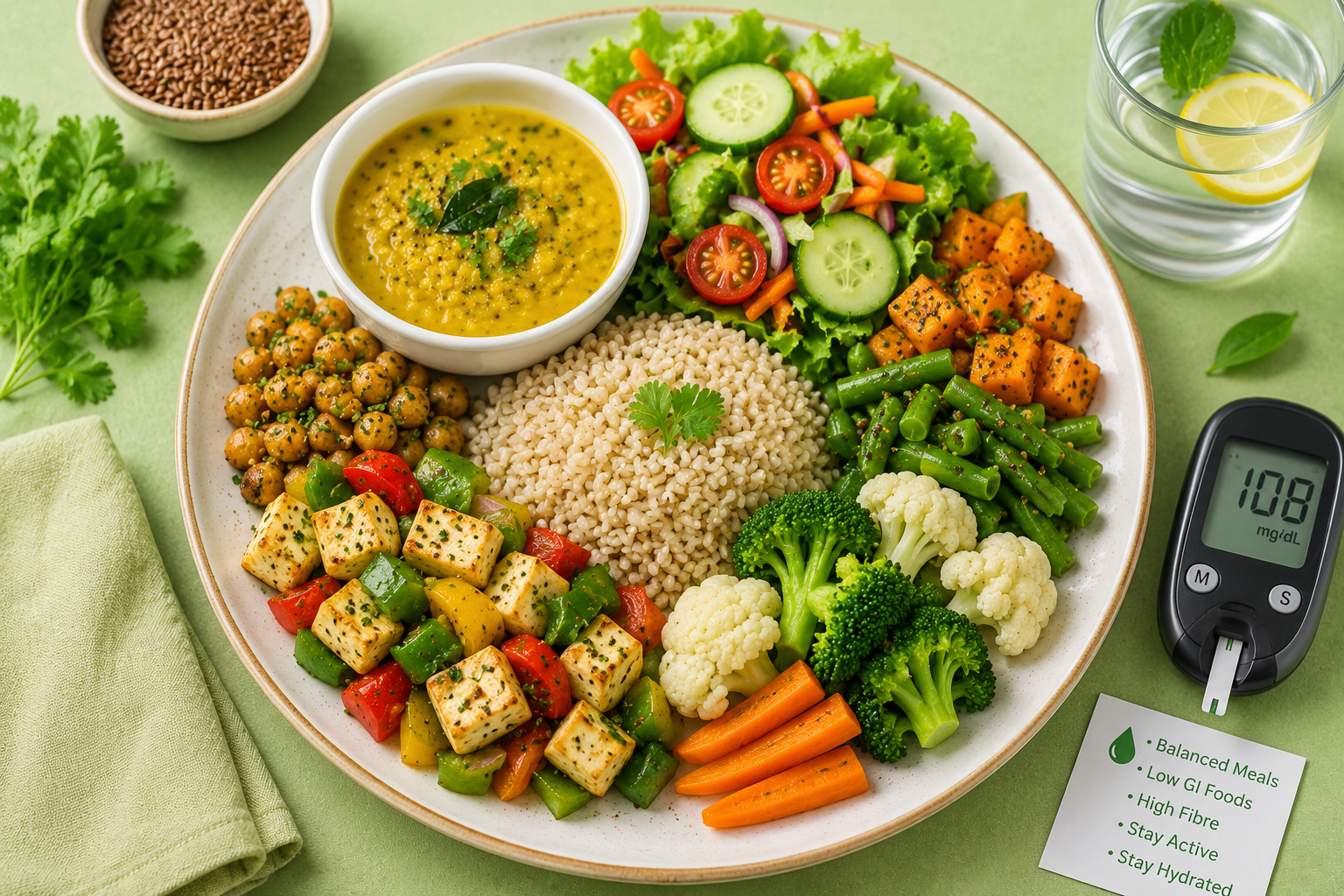
This guide provides general information about creating a diabetes-friendly vegetarian eating plan.
What Should a Diabetes Diet Include?
A healthy diabetes diet should focus on:
- High-fibre foods
- Fresh vegetables
- Whole grains
- Plant-based proteins
- Healthy fats
- Controlled portions of carbohydrates
The goal is not necessarily to eliminate carbohydrates completely, but to choose healthier sources and manage portion sizes.
Best Foods for People with Diabetes
1. Non-Starchy Vegetables
Vegetables are rich in vitamins, minerals, and fibre. Include options such as:
- Spinach
- Broccoli
- Cauliflower
- Cabbage
- Cucumber
- Tomatoes
- Bell peppers
- Beans
- Bottle gourd
- Bitter gourd
Try to include a variety of vegetables in your daily meals.
2. Whole Grains
Choose whole-grain carbohydrates instead of refined grains whenever possible.
- Brown rice
- Oats
- Whole-wheat roti
- Quinoa
- Millets (Ragi, Bajra, Jowar)
- Barley
Whole grains contain more fibre and may help support better blood sugar management as part of a balanced diet.
3. Plant-Based Protein Foods
Protein helps keep you full and supports overall health.
- Dal and lentils
- Chickpeas
- Kidney beans (Rajma)
- Black-eyed peas
- Tofu
- Paneer (in moderation)
- Soy chunks
- Sprouts
- Greek yoghurt or curd (unsweetened)
4. Healthy Fats
Include healthy fats in moderation, such as:
- Almonds
- Walnuts
- Peanuts
- Flaxseeds
- Chia seeds
- Pumpkin seeds
- Avocado
- Olive oil
Foods to Limit
People with diabetes should generally limit foods high in added sugar and highly refined carbohydrates, including:
- Sugary drinks and soft drinks
- Sweets and desserts
- Packaged snacks
- White bread
- Excessive polished white rice
- Fried foods
- Bakery products
- Highly processed foods
Sample Diabetes Diet Plan
Early Morning
- Warm water or an unsweetened herbal drink
- A small handful of almonds or walnuts
Breakfast
Choose one option:
- Vegetable oats
- Idli with sambar
- Vegetable upma
- Whole-wheat roti with vegetable curry
- Besan chilla with mint chutney
Mid-Morning Snack
- One small fruit (apple, guava, pear, or orange)
- Unsweetened yoghurt or buttermilk
Lunch
A balanced plate may include:
- Plenty of non-starchy vegetables
- Dal, rajma, chole, tofu, or paneer
- A controlled portion of brown rice or whole-wheat roti
- Fresh salad
Evening Snack
- Roasted chickpeas
- Sprouts chaat
- Mixed nuts in moderation
- Unsweetened tea or coffee
Dinner
Keep dinner light and balanced:
- Mixed vegetable curry
- Tofu, paneer, or dal
- Whole-wheat roti or millet roti
- Salad or sautéed vegetables
The Importance of Portion Control
Even healthy foods can raise blood sugar when consumed in large quantities. Paying attention to portion sizes and the total amount of carbohydrates consumed is important for diabetes management.
A simple plate method:
- Half your plate with non-starchy vegetables
- One-quarter with protein-rich foods
- One-quarter with whole grains or other healthy carbohydrates
Stay Hydrated
Water is usually the best choice for hydration. Limit sugary beverages, which can cause a rapid increase in blood sugar levels.
Herbal teas, unsweetened green tea, and buttermilk can also be good options.
Important: This article provides general nutrition information and is not a substitute for advice from a qualified healthcare professional. Individual dietary needs can vary.
Conclusion
A balanced vegetarian diet can include a wide variety of vegetables, whole grains, plant-based proteins and healthy fats. Portion control and choosing less processed foods can also help support healthier eating habits.
If you have diabetes or are taking medication for blood sugar management, discuss major dietary changes with your doctor or registered dietitian.